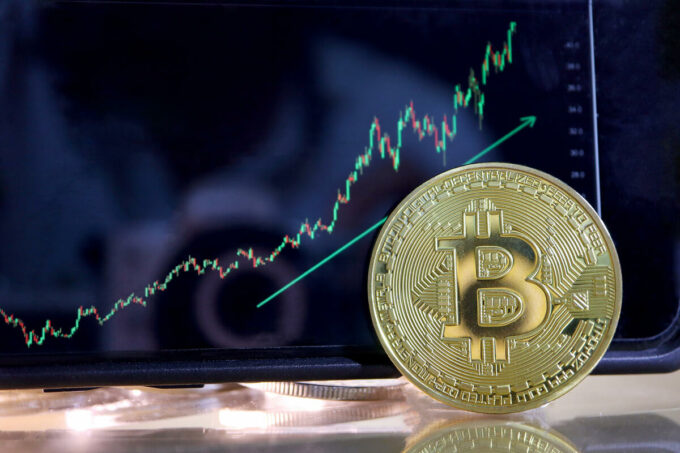
Cryptocurrency markets are moving through a phase of muted conviction, where price direction is increasingly dictated by macroeconomic signals rather than internal momentum. Bitcoin and major digital assets continue to respond to shifting expectations around U.S. interest rates, ETF flows, and broader risk appetite across global markets. This environment has produced a narrow trading range, with investors hesitant to commit to stronger directional bets.
Bitcoin is currently hovering near the $63,000 area, with recent data showing the asset trading 2.6 percent lower at $62,871.07 after a volatile start to June. Market readings over recent sessions place Bitcoin broadly between $63,396 and $64,105, highlighting a lack of clear directional momentum as traders await further signals from the Federal Reserve and ETF flow data.
The latest movement follows a period of sharp swings earlier in the month, when Bitcoin briefly slipped toward the low $60,000s amid broader risk-off sentiment across global markets. Despite this pullback, long-term holders have continued to accumulate positions, helping stabilize price action even as short-term ETF inflows fluctuate. Analysts describe the current phase as a state of equilibrium rather than capitulation, with neither buyers nor sellers firmly in control of trend direction.
Ethereum weakness
Ethereum remains the second-largest cryptocurrency by market capitalization and is tracking Bitcoin’s sideways trajectory. ETH is currently trading 3.46 percent lower at $1,686.08, following earlier June volatility that saw sharp declines during broader liquidations across crypto markets. Selloffs earlier in the month pushed Ethereum briefly toward the $1,600 zone before partial recovery as risk sentiment stabilized alongside Bitcoin.
Read more: New UAE blockchain-powered service enables 24/7 multi-currency business payments
Muted altcoin performance
Other major altcoins are also showing muted performance. XRP is trading around the $1.15–$1.25 range based on recent market snapshots, continuing to lag behind Bitcoin’s relative stability. Market participants point to regulatory uncertainty and uneven institutional demand as key constraints on upside momentum, despite periodic optimism linked to ETF discussions and legal clarity narratives.
Solana, Cardano, and Dogecoin have similarly mirrored the broader consolidation pattern. Intraday volatility persists across these assets, but there is no sustained directional trend. Liquidity remains thinner than in Bitcoin and Ethereum, amplifying downside moves during risk-off periods while limiting recovery strength during brief rebounds.
Macro pressure
The dominant macro driver continues to be U.S. monetary policy expectations. Federal Reserve signaling has reinforced the possibility of a tighter-for-longer stance, keeping pressure on risk assets, including cryptocurrencies. Higher Treasury yields and a stronger U.S. dollar have historically reduced demand for non-yielding assets such as Bitcoin, and that dynamic remains central to trading behavior in mid-2026.
ETF flows are also shaping short-term sentiment. While institutional demand through spot Bitcoin ETFs remains structurally supportive over the long term, recent data shows alternating inflows and outflows, contributing to short-term price indecision. The absence of consistent inflows has reduced upward momentum even as long-term accumulation trends persist among large holders.
Market sentiment
Sentiment across crypto markets remains cautious following earlier June liquidations that removed leveraged positions across Bitcoin, Ethereum, and altcoins. These liquidations initially accelerated downside moves but also reduced excess leverage, contributing to the current stabilization phase.
Bitcoin’s ability to hold above the low-$60,000 support zone is seen as critical for maintaining broader market structure. A sustained break below this range could reopen downside risk toward earlier 2026 accumulation levels, while a move back above the mid-$60,000s would likely signal renewed bullish momentum.
Ethereum remains closely correlated with Bitcoin’s trajectory, although staking flows and layer-2 adoption continue to provide underlying structural support. XRP remains more event-driven, with price action influenced primarily by regulatory and institutional adoption narratives rather than broad market beta.